
Dr. Jensen is an periodontal expert and offers treatments like deep cleanings, surgeries, and bone grafts to improve your gum and oral health.
Healthy Tissues Lead to Healthy Teeth
A beautiful smile is about more than just straight, white teeth—it also depends on the health of the gums and bone that support them. These surrounding tissues play a vital role in both the appearance and long-term stability of your smile.
When plaque and bacteria build up around the teeth, they can cause inflammation and damage to the gums and supporting bone. Left untreated, this can lead to gum disease, which affects not only your oral health but your overall well-being.
We specialize in diagnosing and treating all stages of gum disease, from early signs of gingivitis to more advanced periodontal issues. With expert care and personalized treatment plans, we help restore gum health and protect your teeth for the long run.
Deep Cleaning (Scaling & Root Planing)
If your dentist has told you that you need a dental deep cleaning, you are not alone. Many adults reach a point where a routine cleaning simply is not enough. Scaling and root planing is a non-surgical treatment that stops gum disease from progressing and helps protect your teeth for the long term. At Jensen Periodontics, we take time before any procedure to walk you through exactly what to expect, so you can feel confident every step of the way.
What is Scaling and Root Planing?
Scaling and root planing is a dental deep cleaning that goes beneath the gumline. A regular cleaning removes plaque and tartar from the surface of your teeth. Periodontal scaling goes further, clearing bacteria and buildup that have settled below your gums and along the roots of your teeth. Root planing then smooths those root surfaces so your gums can reattach and heal properly. Together, these two steps treat the source of gum disease rather than just the surface.
Signs You May Need a Periodontal Cleaning
Your general dentist may refer you to a periodontist if you have:
Bleeding or swollen gums
Persistent bad breath that does not improve with brushing
Gum sensitivity or tenderness
Gum pockets deeper than 4mm
Gum recession or teeth that appear longer than before
If any of these sound familiar, a deep gum cleaning may be the right next step.
Periodontal Surgery
In more advanced cases of gum disease, deep cleaning alone may not be enough. That’s when periodontal surgery becomes necessary to remove infected tissue, repair damage, and rebuild lost support structures around the teeth.
Depending on your specific needs, treatment may involve procedures like bone grafting, gum grafting, or pocket reduction. Our team provides compassionate, customized care every step of the way, with the goal of restoring both your oral health and your confidence.

Natural Tooth
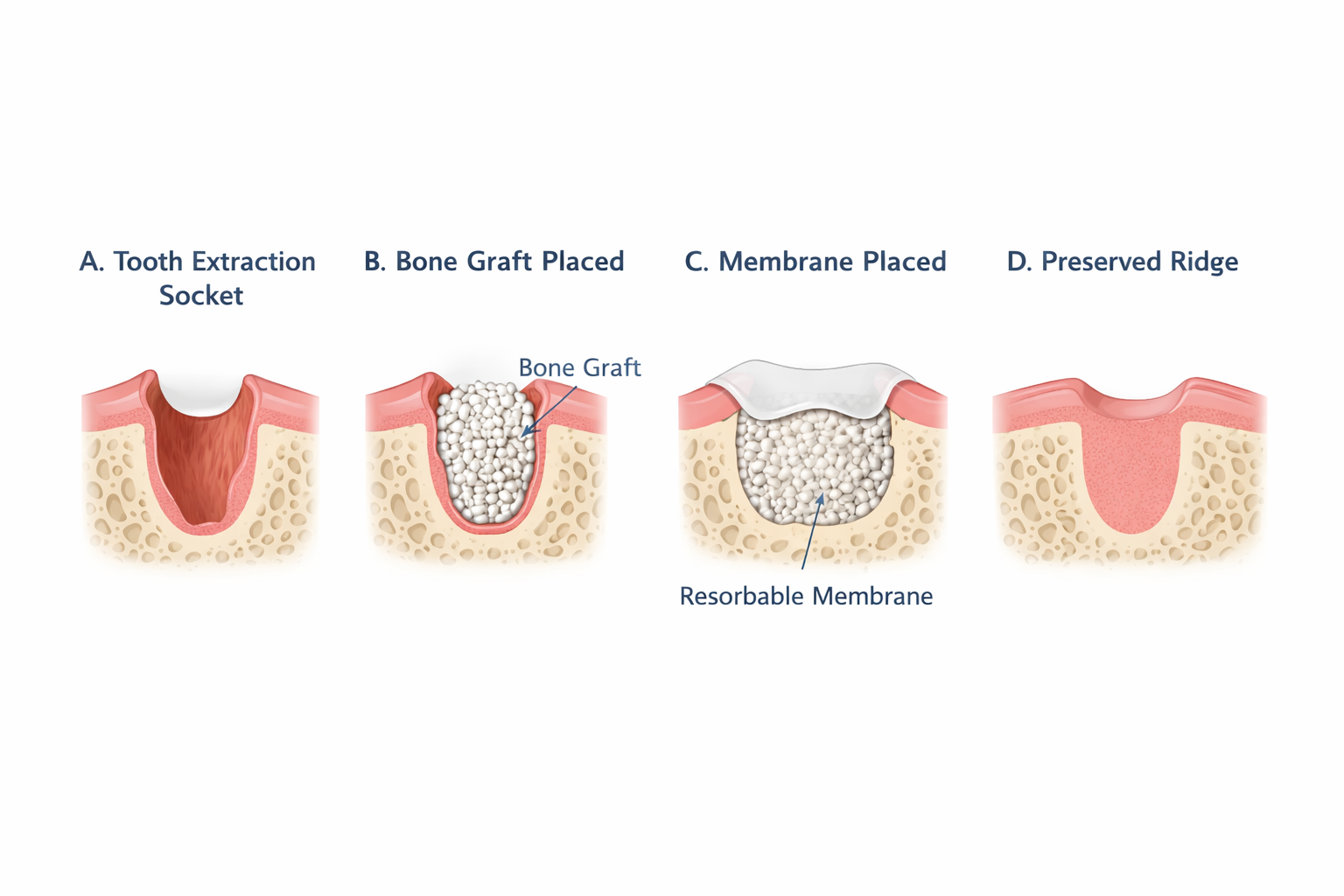
Extraction Site
Bone Grafting
Bone loss can result from gum disease, tooth loss, or natural changes in the jaw, such as sinus expansion. When this happens, it can make dental implants difficult or even impossible without rebuilding the bone first.
We specialize in bone grafting, a safe and effective procedure that replaces lost bone and strengthens your jaw. This not only restores function and support for your teeth but also makes it possible to move forward with dental implants or other restorative treatments.
Bone grafting is an important step in rebuilding a healthy, strong foundation for your smile.
There are three common situations where a bone graft may be needed:
Bone loss around a natural tooth:
Even if bone loss is present, the tooth itself may still be healthy. In these cases, a bone graft can help support the tooth and allow it to be saved.
2. After a tooth is removed:
When a tooth needs to be extracted, a bone graft may be placed to rebuild the bone and prepare the area for a future dental implant.
3. Bone loss around a dental implant:
Sometimes bone loss can occur around an implant. If caught early, a bone graft may help rebuild the bone and preserve the implant.
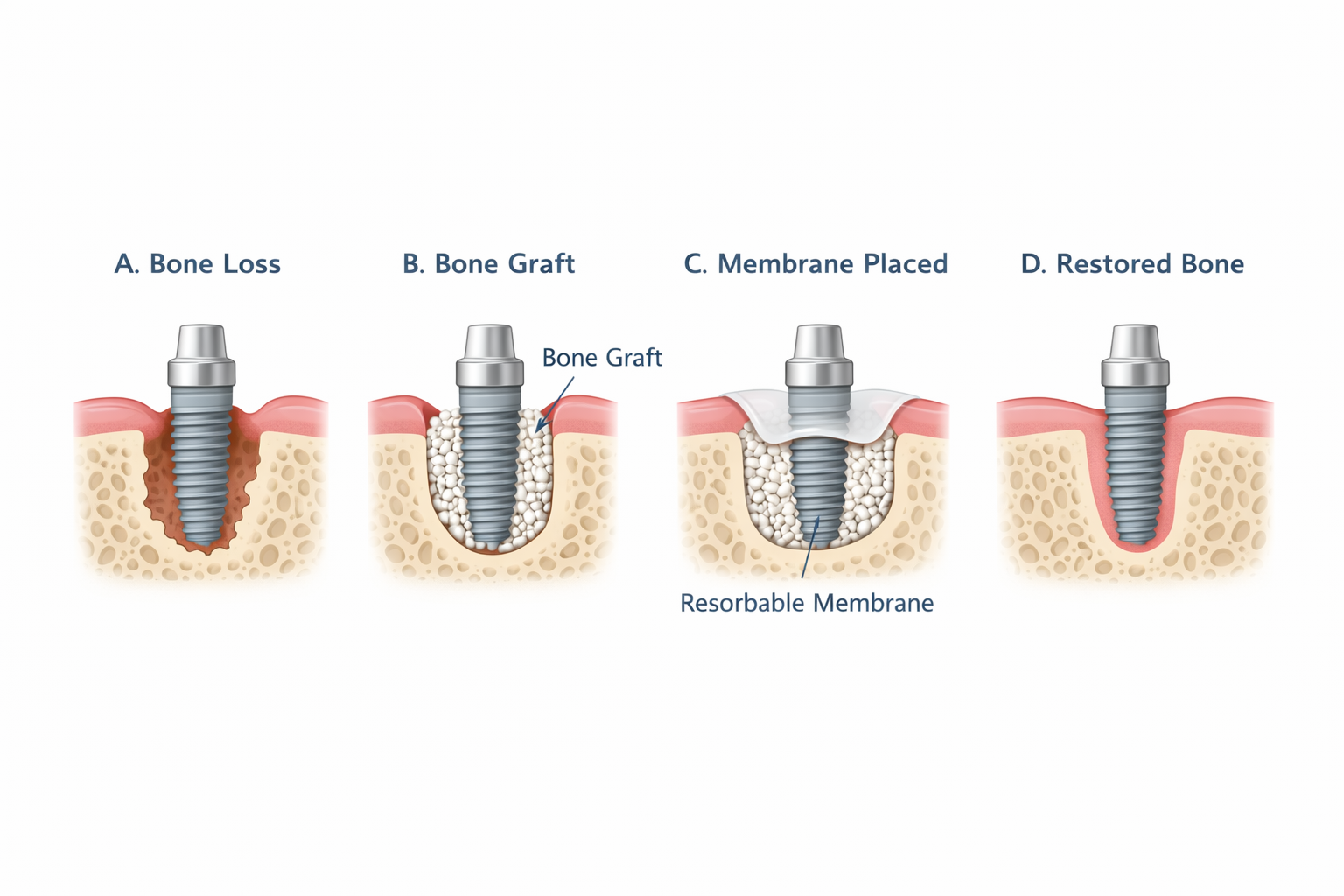
Around Implant
Frequently Asked Questions
How is a dental deep cleaning different from a regular cleaning? A regular cleaning focuses on the surface of your teeth and just above the gumline. It is a preventative gum disease treatment. A dental deep cleaning, also called periodontal scaling and root planing, goes further. It removes built-up tartar and bacteria from below the gumline, all the way down to the root of the tooth. If gum disease has caused your gum pockets to deepen, a standard cleaning simply can't reach what needs to be addressed. That's when periodontal scaling comes in.
What happens if I don't get a dental deep cleaning when my dentist recommends one? Gum disease will progress. Without a dental deep cleaning, the bacteria living below your gumline will continue to irritate and break down the tissue and bone that hold your teeth in place. Over time, that can mean deeper gum pockets, bone loss, and eventually loose or missing teeth. The good news is that a periodontal cleaning, done at the right time, can stop that progression in its tracks. The sooner it's addressed, the more we can protect.
Is scaling and root planing painful? That is one of the most common questions we hear, and it is completely understandable to ask. Before your periodontal scaling begins, we use local anesthetic to numb the area so you stay comfortable throughout the deep gum cleaning. Most patients feel some pressure and movement during the procedure, but not pain. After your dental deep cleaning, your gums may feel tender or sensitive for a few days. That is a normal part of the healing process and typically clears up quickly. At Jensen Periodontics, we take time before every periodontal cleaning to walk you through what to expect so you are never left guessing. Your comfort is our priority from the moment you walk in.

Book a Consultation
We’ll take the time to understand your needs and goals, then create a personalized treatment plan tailored just for you.